

For many people with atrial fibrillation, the conversation about stroke comes soon after the diagnosis. The usual answer is a daily blood thinner, and for many patients it works well. For others, years of bleeding worries, bruising, falls or missed doses make that answer harder to live with, and the question becomes whether the WATCHMAN device is a better fit. This guide compares WATCHMAN vs blood thinners on the points that matter in the exam room: how each one lowers stroke risk, what each asks of you over time, and who tends to be a candidate for which. Dr. John F. Beshai walks patients through this choice at the Heart Rhythm Institute of Arizona in Phoenix.
Where AFib Clots Start, and Why It Shapes the Choice
In atrial fibrillation, the upper chambers of the heart quiver instead of contracting in a steady rhythm. Blood moves less efficiently, and it tends to pool in a small pouch off the upper left chamber called the left atrial appendage (LAA). That pooled blood can clot. If a clot breaks loose and travels to the brain, it can cause a stroke.
Both options on the table target that same risk, but from opposite directions. Blood thinners change how readily your blood clots everywhere in the body. The WATCHMAN closes off the place where most of those clots form. Understanding that difference makes the rest of the comparison much easier to follow.
Daily Medication: What Blood Thinners Do Well, and Where They Strain
Oral anticoagulants are the long-standing first-line approach to stroke prevention in AFib, and they are backed by a large body of evidence. Warfarin is the older option and requires regular blood tests to keep its effect in range. Newer direct oral anticoagulants, such as apixaban, rivaroxaban and dabigatran, generally need less monitoring.
The trade-off is bleeding. Because these medications reduce clotting throughout the bloodstream, they raise the risk of bleeding, including bleeding in the stomach or intestines.
Long-term use can be harder to manage for patients with a history of:
- Uncontrolled blood pressure
- Stomach ulcers
- Kidney problems
- Liver disease
- Cancer
- An increased risk of falls
Some patients also find the routine itself difficult: remembering a dose every day, managing interactions with other medications, or, with warfarin, keeping up with dietary restrictions and lab visits. None of this rules medication out. It simply means the decision has to weigh your stroke risk against your bleeding risk, and your provider will use validated scoring tools to do exactly that.
Sealing the Appendage: How the WATCHMAN Procedure Works
The WATCHMAN FLX device is a permanent implant about the size of a quarter. It is FDA-approved as a left atrial appendage closure device, and it is placed in the opening of the LAA to close it off, so clots that form there cannot travel to the rest of the body.
The procedure is minimally invasive. You are sedated or placed under general anesthesia, a small incision is made over a blood vessel in the groin, and a catheter is guided up to the heart to position the device. Dr. Beshai uses intracardiac echocardiography to see the appendage from inside the heart while the device is placed. The implant is a one-time procedure, and the device does not need replacing.
Afterward you rest in a recovery room while the anesthesia wears off, and some soreness at the insertion site is normal. The device does not end medication on day one: most patients still take some type of medication for about six months while the heart heals around the implant, followed by a check-up with Dr. Beshai to confirm the device is working as intended.
Side by Side: Mechanism, Commitment and Recovery
How Each One Protects You
- WATCHMAN: physically closes the left atrial appendage, the source of most AFib-related clots.
- Blood thinners: lower the blood’s ability to clot throughout the body, for as long as you take them.
What Each Asks of You Over Time
- WATCHMAN: one procedure, then a period of medication of roughly six months and follow-up visits.
- Blood thinners: a daily dose, usually indefinitely, with monitoring for bleeding and drug interactions.
The First Weeks
- WATCHMAN: a short procedural recovery with some soreness at the groin; Dr. Beshai will tell you when to return to your usual activity.
- Blood thinners: no procedure and no recovery period, though the dose may be adjusted early on.
A list like this captures the outline, not the decision. Kidney function, fall risk, prior bleeding, how reliably you take medications and your personal stroke risk score all push the answer one way or the other. For some patients, stroke prevention is also only one part of a wider rhythm plan that may include ablation or hybrid AFib therapy.
Signs the Device May Deserve a Closer Look
The WATCHMAN is generally considered for patients with AFib not caused by a heart valve problem who have a sound clinical reason to look for an alternative to long-term blood thinners. That often includes people who have had bleeding complications on anticoagulants, people at higher risk of falls or injury, people who struggle to take medication consistently, and people whose quality of life is affected by years of anticoagulation. Candidates also need to be able to take medication for a period after the implant.
Blood thinners remain a strong choice for many others, particularly patients who tolerate them well, have no meaningful bleeding history and would rather avoid a procedure. Neither option is better for everyone.
That is why the evaluation matters as much as the options. Dr. Beshai is a board-certified cardiologist who completed his cardiac electrophysiology training at the Hospital of the University of Pennsylvania. He has published in journals including The New England Journal of Medicine and the Journal of the American College of Cardiology, holds fellowships in the American College of Cardiology and the Heart Rhythm Society, and currently serves as President of the Board of Directors of the Intersocietal Accreditation Commission for Cardiac Electrophysiology. You can read more about his training and faculty appointments.
Questions Patients Bring to the Comparison
Will I still take any medication after the WATCHMAN?
Yes, for a while. Most patients take some type of medication for about six months after the implant while the heart heals around the device. Dr. Beshai sets the specific schedule and reviews it at your follow-up visits.
Is the WATCHMAN procedure covered by insurance?
Many plans, including Medicare, may cover the WATCHMAN for patients who meet specific clinical criteria. Coverage depends on your plan and your documented medical history, so it is worth confirming the details with your insurer before the procedure.
Can the WATCHMAN be combined with other AFib treatments?
Often, yes. The WATCHMAN addresses stroke risk, not the irregular rhythm itself, so some patients also have rhythm-control procedures such as cardiac ablation. Whether a combined plan makes sense depends on your AFib pattern, your symptoms and your overall heart health.
How is candidacy decided?
Through a full evaluation of your AFib type, stroke risk score, bleeding history, kidney function, current medications and general health. An electrocardiogram and other diagnostic tests are usually part of the work-up.
What should I ask during the consultation?
Useful questions include: What is my stroke risk score, and what is my bleeding risk on anticoagulants? Am I eligible for the WATCHMAN? How many of these procedures does the physician perform? What does follow-up look like in the first six months?
Bring Your Bleeding History to the First Visit
The most useful thing you can bring to a WATCHMAN vs blood thinners conversation is a clear record: any bleeding episodes, falls, missed doses, other medications and recent lab results. With that in hand, Dr. Beshai can match the option to your risk rather than to a general rule. To set up a consultation at the Heart Rhythm Institute of Arizona in Phoenix, call the office or request an appointment online.
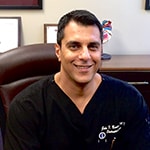
Dr. Beshai is a board-certified electrophysiologist internationally renowned and respected for his expertise and research. Having published in major medical journals and travelled all over the world to present research, he is dedicated to providing innovative, state-of-the-art care to his patients.